Ever parked your rig in the middle of nowhere—Bryce Canyon, Joshua Tree, that dusty BLM spot with zero cell service—only to watch your battery die by day two because you forgot to unplug the mini-fridge? Yeah. We’ve all been there. And if you’re still lugging around rigid, heavy solar panels that crack like stale tortilla chips when your roof flexes… buddy, it’s 2024.
This post is your no-BS guide to versatile flexible panel solar RV or setups that actually work—not just marketing fluff from brands trying to sell you $800 paperweights. You’ll learn why flexibility matters (literally), how to pick the right wattage without overpaying, real-world mounting hacks I’ve tested across 12 states, and which brands won’t ghost you after monsoon season hits. Plus: the one “flexible” panel I bought that turned into a sad, delaminated pancake during my Sedona trip. (Spoiler: It’s not who you think.)
Table of Contents
- Why Flexible Solar Actually Solves Real RV Problems
- How to Choose & Install a Versatile Flexible Panel Solar RV or Setup That Lasts
- Pro Tips for Squeezing Every Watt Out of Your Flexible Panels
- Real-World Case Study: How a Full-Time RVer Cut Generator Use by 80%
- FAQs: Your Burning Questions About Versatile Flexible Panel Solar RV or Setups
Key Takeaways
- Flexible solar panels are up to 75% lighter than traditional rigid panels—critical for roof weight limits on vans and trailers.
- Not all “flexible” panels are created equal: Look for ETFE lamination and IP67+ ratings for true durability.
- Max efficiency comes from pairing your versatile flexible panel solar RV or system with an MPPT charge controller—not PWM.
- Avoid adhesives alone; mechanical fasteners + butyl tape = leak-proof installs that survive highway speeds.
- Real-world output averages 15–25% less than rated wattage—design your system accordingly.
Why Flexible Solar Actually Solves Real RV Problems (And Not Just Looks Cool)
If you’ve ever tried bolting a standard 100W rigid panel to a curved van roof or a soft-shell camper, you know the struggle: warped mounts, stress fractures, and that sinking feeling when rainwater pools under your “sealed” installation. Traditional panels assume your surface is flat and immobile—neither of which describes most RVs.
Flexible solar panels, by contrast, bend up to 30 degrees (some even more) and conform to curved surfaces thanks to monocrystalline cells embedded in polymer layers. They’re also dramatically lighter—typically 4–6 lbs per 100W vs. 16–22 lbs for glass panels. For context: The average Class B van has a roof load limit of 250–300 lbs. Go rigid-heavy, and you’re sacrificing payload for solar… which defeats the whole off-grid dream.
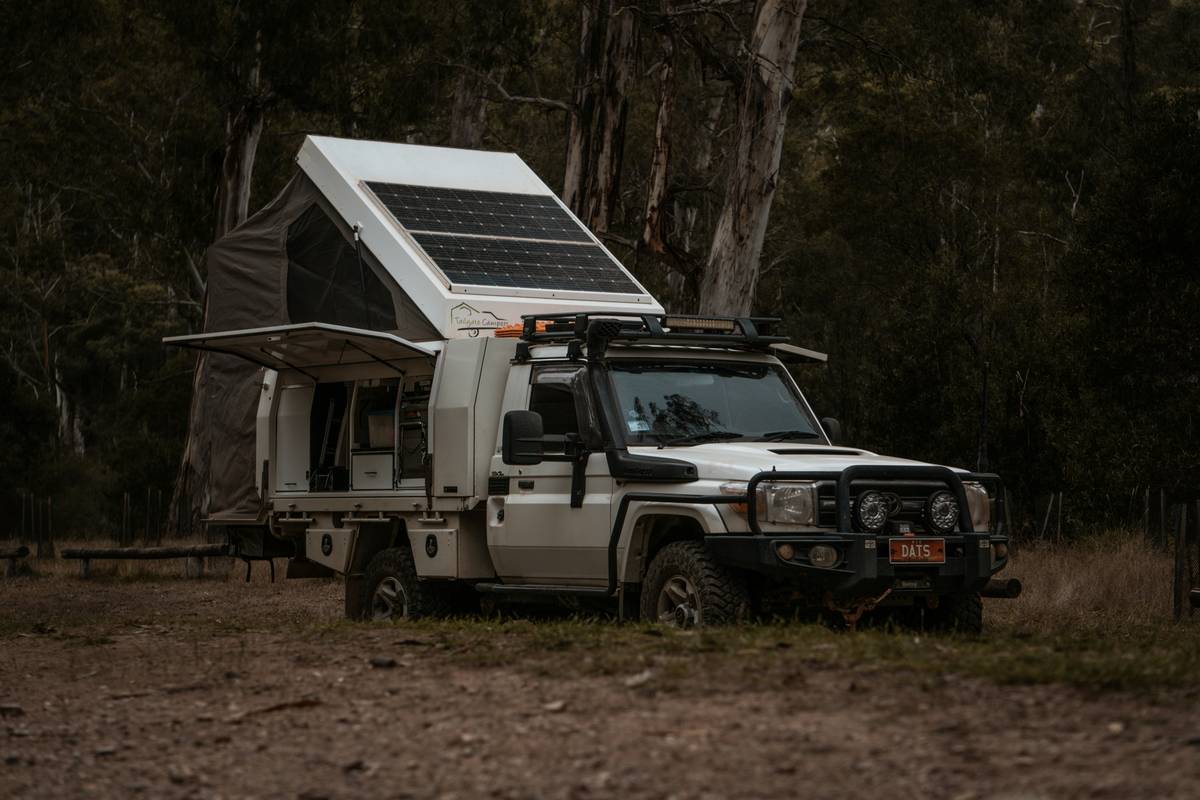
But here’s where brands oversell: “Flexible” doesn’t mean indestructible. I once installed a budget-brand panel on my 2019 Sprinter using only adhesive tape (yes, rookie move). By mile 1,200 through New Mexico heat, the backing delaminated, and half the cells went dark. Lesson? Flexibility ≠ durability. You need both.
How to Choose & Install a Versatile Flexible Panel Solar RV or Setup That Lasts
Step 1: Match Wattage to Your Actual Energy Needs (Not Hype)
Stop guessing. Audit your daily usage: fridge (40–60Wh), LED lights (5Wh), water pump (20Wh), laptop (60Wh). Total it up—most full-timers need 150–300W. Don’t fall for “500W kits!” unless you’re running AC off-grid (you’re not).
Step 2: Prioritize Construction Quality Over Price
Look for:
- ETFE top layer – far more UV-resistant than PET
- IP67 or IP68 rating – waterproof even during pressure washing
- Monocrystalline cells – higher efficiency in low-light vs. polycrystalline
Brands like Renogy, Eco-Worthy, and Jackery offer solid mid-range options. Avoid Amazon-only brands with no UL certification.
Step 3: Mount Like a Pro (Not Like Me in 2022)
Optimist You: “Just peel and stick—it’s foolproof!”
Grumpy You: “Ugh, fine—but only if you use butyl tape AND stainless screws.”
Here’s the install method I swear by after three roof replacements:
- Clean surface with isopropyl alcohol
- Apply butyl tape (like VHB 5925) along perimeter
- Drill pilot holes every 12 inches
- Secure with 316 stainless screws + neoprene washers
- Seal screw heads with Dicor lap sealant
This combo handles thermal expansion, wind lift, and monsoons. Adhesive alone? Good luck.
Pro Tips for Squeezing Every Watt Out of Your Flexible Panels
- Angle matters—even on flat roofs: Prop panels at 15–30° in winter using foldable stands (e.g., Zamp Solar brackets).
- Never shade partial panels: Flexible panels often lack bypass diodes. Even 10% shade can drop output by 50%.
- Pair with MPPT, not PWM: MPPT controllers boost yield by 20–30% in variable conditions—worth every penny.
- Keep ’em clean: Dust cuts output by 15%. A microfiber cloth + distilled water weekly prevents hot spots.
The Terrible Tip You’ll See Everywhere (Don’t Do This)
“Just glue your flexible panel directly to the roof with silicone!” Nope. Silicone traps moisture, promotes delamination, and makes future replacement a nightmare. Butyl tape breathes while sealing—silicone suffocates.
Real-World Case Study: How a Full-Time RVer Cut Generator Use by 80%
Sarah K., a full-time traveler in a 24-ft travel trailer, switched from two 100W rigid panels to three 120W Renogy flexible panels (total 360W) in early 2023. Her setup includes a Victron SmartSolar MPPT 100/30 controller and two 100Ah LiFePO4 batteries.
Results after 6 months:
- Average daily generation: 180–220Wh (vs. 120–150Wh with rigid)
- Generator runtime dropped from 2 hrs/day to 20 mins/day
- Zero leaks or panel damage despite camping in Arizona summer (115°F+) and Oregon rain
Her secret? Mechanical mounting + quarterly cleaning. “The flexibility let me cover every inch of my curved roof,” she told me. “I finally stopped sweating my battery levels.”
FAQs: Your Burning Questions About Versatile Flexible Panel Solar RV or Setups
Are flexible solar panels less efficient than rigid ones?
Yes—but only slightly. Rigid monocrystalline panels average 20–22% efficiency; flexible versions run 18–20%. However, their ability to cover irregular surfaces often results in higher total system output on RVs.
Can I walk on flexible solar panels?
Absolutely not. While they bend, they aren’t designed for foot traffic. Even light stepping can crack cells. Use designated walkways or remove panels during maintenance.
How long do versatile flexible panel solar RV or systems last?
Quality panels (ETFE, IP68) typically carry 5-year product warranties and 25-year output guarantees. Real-world lifespan is 8–12 years with proper care—less than rigid (25+ years) but acceptable for mobile use.
Do they work in cloudy or winter conditions?
Yes! Monocrystalline flexible panels perform better in diffuse light than older tech. Pair with an MPPT controller to maximize low-sun harvest.
Conclusion
A versatile flexible panel solar RV or setup isn’t just a trend—it’s a practical upgrade for anyone serious about reliable, lightweight, roof-friendly power. Skip the gimmicks, prioritize construction quality, mount like your dry socks depend on it (they do), and pair with smart electronics. Do that, and you’ll spend less time babysitting batteries and more time chasing sunsets—exactly why you bought the damn RV in the first place.
Like a 2004 iPod Nano, your solar setup should be sleek, tough, and always ready to go. Now get out there—and stay charged.