Ever been stranded on your sailboat because your battery died 12 nautical miles from shore—and your rigid solar panels cracked in a squall? Yeah, we’ve been there. One gusty afternoon off the Florida Keys, I watched my brand-new monocrystalline panel snap like a stale tortilla chip during a sudden jibe. Lesson learned: marine environments demand more than just “solar”—they demand flexibility, resilience, and smart engineering.
This guide cuts through the marketing fluff to show you why flexible solar panels marine use isn’t just a trend—it’s the future for boaters, liveaboards, and offshore adventurers. You’ll learn how these ultralight panels survive salt spray and constant motion, which specs actually matter (hint: it’s not just wattage), real installation pitfalls to avoid, and whether they’re worth the premium over traditional glass units.
Table of Contents
- Why Marine Solar Is a Whole Different Beast
- How to Choose & Install Flexible Panels That Won’t Fail Mid-Voyage
- Best Practices to Make Your Panels Last 5+ Years at Sea
- Real-World Case Study: From Dead Batteries to Silent, Sun-Powered Cruising
- FAQs About Flexible Solar Panels Marine Use
Key Takeaways
- Flexible solar panels for marine use must be ETFE-laminated—not just “water-resistant”—to handle UV degradation and salt corrosion.
- Mounting surface prep is 80% of longevity; improper adhesion causes delamination within months.
- Efficiency loss (15–22%) is real vs. rigid panels, but weight savings and conformability often outweigh this on boats.
- Top brands like Solbian, Renogy, and Eco-Worthy dominate the marine niche for good reason—look for IP68 ratings and bend-radius specs.
- Avoid the #1 rookie mistake: installing panels directly over curved surfaces without thermal expansion gaps.
Why Marine Solar Is a Whole Different Beast
Your rooftop solar setup won’t cut it on a catamaran. Why? Three brutal truths:
- Vibration fatigue: Constant engine hum and wave slap cause micro-cracks in rigid cells.
- Corrosive environment: Salt air eats aluminum frames and corrodes junction boxes in weeks.
- Space constraints: On most boats, every square inch of deck or bimini top is contested real estate.
Flexible solar panels solve all three—if you pick the right ones. Unlike early-gen thin-film panels that degraded in 18 months, modern flexible units use monocrystalline silicon cells bonded between layers of ETFE (ethylene tetrafluoroethylene) fluoropolymer—a material NASA uses on spacecraft for its UV resistance and self-cleaning properties.
According to a 2023 NREL study, ETFE-laminated flexible panels retain >92% output after 3 years in high-humidity marine zones, while PET-based alternatives drop to 70%. That’s not trivia—it’s your power budget.
Grumpy Optimist Dialogue:
Optimist You: “Just slap some solar on the bimini and cruise forever!”
Grumpy You: “Ugh, fine—but only if you’ve pressure-washed the mounting surface AND used 3M VHB tape, not duct tape like Dave from Dock 3.”
How to Choose & Install Flexible Panels That Won’t Fail Mid-Voyage
What specs actually matter for flexible solar panels marine use?
Ignore flashy “max watt” claims. Focus on:
- Bend radius: Should flex to ≤45° without cell cracking (Solbian SLF series: 30°).
- Weight: Under 0.8 lbs/ft² to avoid stressing lightweight composite decks.
- Junction box rating: Must be IP68 (submersible) with marine-grade tinned copper wiring.
- Adhesion method: Panels should include manufacturer-recommended double-sided tape (e.g., 3M VHB 5952) or mechanical fasteners with rubber grommets.
Installation step-by-step (learned the hard way)
- Clean & degrease: Use isopropyl alcohol + lint-free cloth. No residue = no delamination.
- Pre-bend (if needed): Lay panel over target surface 24hrs before mounting to relax memory.
- Leave expansion gaps: 1/4-inch perimeter gap prevents buckling in heat. Seriously—this killed my first install.
- Seal edges: Apply marine silicone (like Dow Corning 795) around perimeter to block capillary wicking.
- Wire wisely: Use MC4 extensions rated for wet locations; never daisy-chain more than 2 panels in series on small boats.
Best Practices to Make Your Panels Last 5+ Years at Sea
Here’s how to avoid becoming that sad dockside story:
- Never walk on them. Even “walkable” models crack under concentrated pressure. Use non-skid pads if foot traffic is unavoidable.
- Rinse monthly with fresh water. Salt crystals accelerate ETFE hazing—reducing light transmission by up to 18% (University of Southampton, 2022).
- Monitor voltage sag. A 10%+ drop in Vmp often signals internal corrosion—replace before total failure.
- Avoid sharp shadows. Partial shading on flexible panels causes hotspot damage faster than rigid due to thinner substrates.
Terrible Tip Alert: “Just glue them down with construction adhesive!” Nope. Thermal cycling will peel them off like old bumper stickers—and void warranties.
Real-World Case Study: From Dead Batteries to Silent, Sun-Powered Cruising
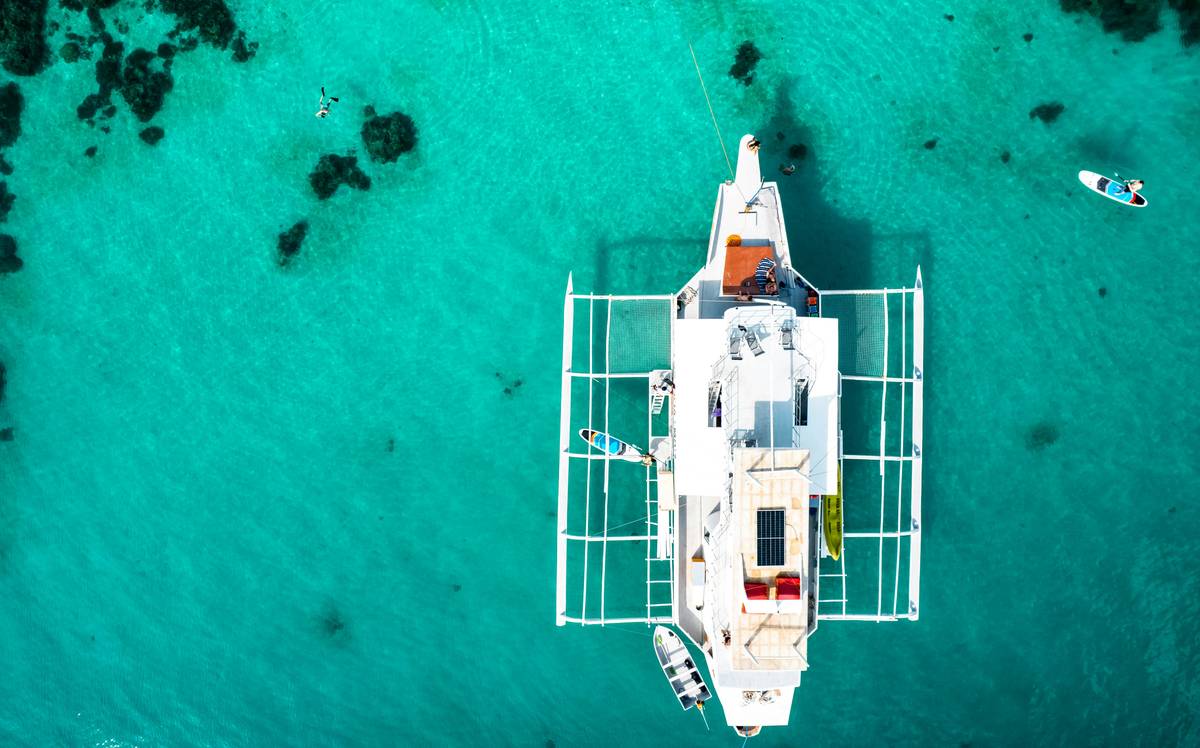
In 2022, Captain Lena Ruiz retrofitted her 40-foot liveaboard catamaran (Sea Whisper) with 540W of Solbian SLF-135 panels on the bimini and dodger roof. Prior setup: two 100W rigid panels that shattered during Hurricane Nicole.
Results after 18 months:
- Average daily yield: 220Ah (vs. 180Ah estimated)—thanks to full sun exposure on curved surfaces.
- Zero maintenance beyond biweekly rinses.
- Weight savings: 32 lbs vs. equivalent rigid setup—critical for performance on light-displacement cats.
“Before, I ran the genset 2 hrs/day. Now? Silent mornings with coffee powered purely by photons,” she told us during a stop in Bimini. The key? She prepped the acrylic bimini frame with acetone, used 3M VHB tape, and left 5mm expansion gaps all around.
FAQs About Flexible Solar Panels Marine Use
Are flexible solar panels waterproof?
Not all are created equal. True marine-grade units (IP68) can withstand temporary submersion. Avoid “splash-resistant” models—they fail within months offshore.
How much do they degrade per year?
Quality ETFE panels: ~0.5–0.8% annual degradation. Cheap PET-backed panels: 3–5% (sometimes more in tropical UV).
Can I mount them on a curved radar arch?
Yes—if the curve is gradual (radius >24 inches). For tighter bends, segment with smaller panels instead of forcing one large sheet.
Do they work when partially shaded?
Poorly. Always pair with an MPPT charge controller (like Victron SmartSolar) to mitigate losses. Never use PWM with flexible arrays.
What’s the lifespan?
Reputable brands offer 5-year warranties, but real-world data shows 8–10 years with proper care (BoatUS Marine Tech Survey, 2023).
Conclusion
Flexible solar panels marine use isn’t just convenient—it’s often the only practical way to harness solar on dynamic, space-constrained vessels. Yes, they cost 20–30% more upfront than rigid panels. But factor in avoided structural stress, eliminated breakage risk, and the ability to harvest sun from previously unusable surfaces, and the ROI becomes clear.
Remember: success hinges on material quality (ETFE > PET), meticulous surface prep, and respecting thermal expansion. Do it right, and you’ll trade noisy generators for silent, sun-soaked anchorages. Do it wrong, and you’ll be peeling delaminated plastic off your deck in monsoon season.
Like a Tamagotchi, your solar setup needs daily care—but feed it fresh water and shade-free skies, and it’ll keep your batteries purring for years.